
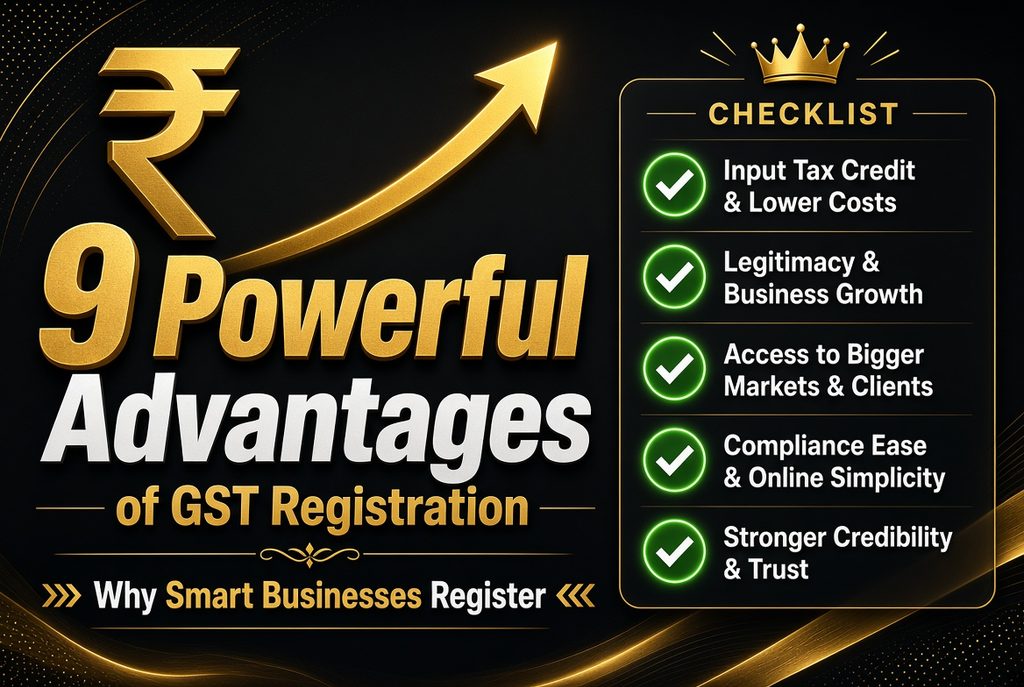
GST registration is often treated as a burden. For many businesses it is actually a working tool.
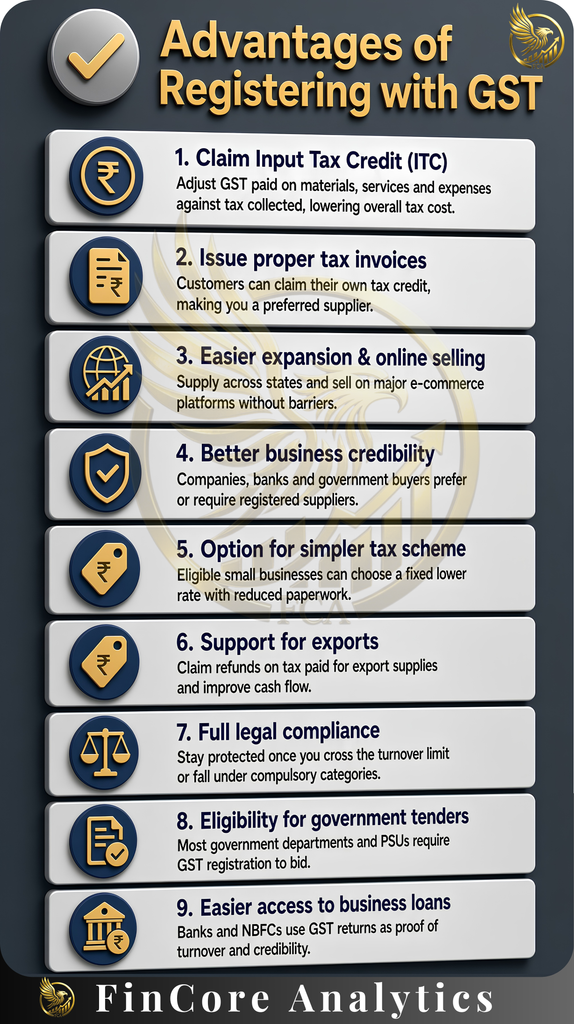
The first benefit is input tax credit. Suppose a garment trader in Surat buys fabric and pays GST on the purchase. After registration, that GST can be set off against the GST collected from customers. Without registration, the tax paid on purchases becomes a cost. With registration, it comes back as credit, which improves cash flow.
The second benefit is a proper tax invoice. Larger buyers — companies, hospitals, hotels, exporters — want a GST invoice so they can claim their own credit. A workshop in Coimbatore that stays unregistered often loses those orders even if the price is lower.
The third is easier expansion. Once you have GSTIN, supplying to another state is a documented interstate supply, not an informal arrangement. Selling on Amazon, Flipkart or other marketplaces also becomes straightforward, because those platforms usually insist on GST registration.
Registration also improves credibility. Banks and NBFCs look at GST returns when they assess turnover for a working-capital loan. Many government departments and PSUs will not even let you bid for a tender without GSTIN. A small fabrication unit in Rajkot that registers often finds it easier to quote for industrial work than a similarly sized unregistered competitor.
Eligible small businesses can opt for the composition scheme and pay tax at a lower fixed rate with lighter paperwork. Exporters can claim refund of tax paid on inputs, which matters when margins are thin. And once turnover crosses the threshold, or you fall in a compulsory category, registration is the clean way to stay on the right side of the law instead of waiting for a notice.
In short, GSTIN is not only a compliance number. It is how a business becomes visible, bankable and usable by serious customers.