
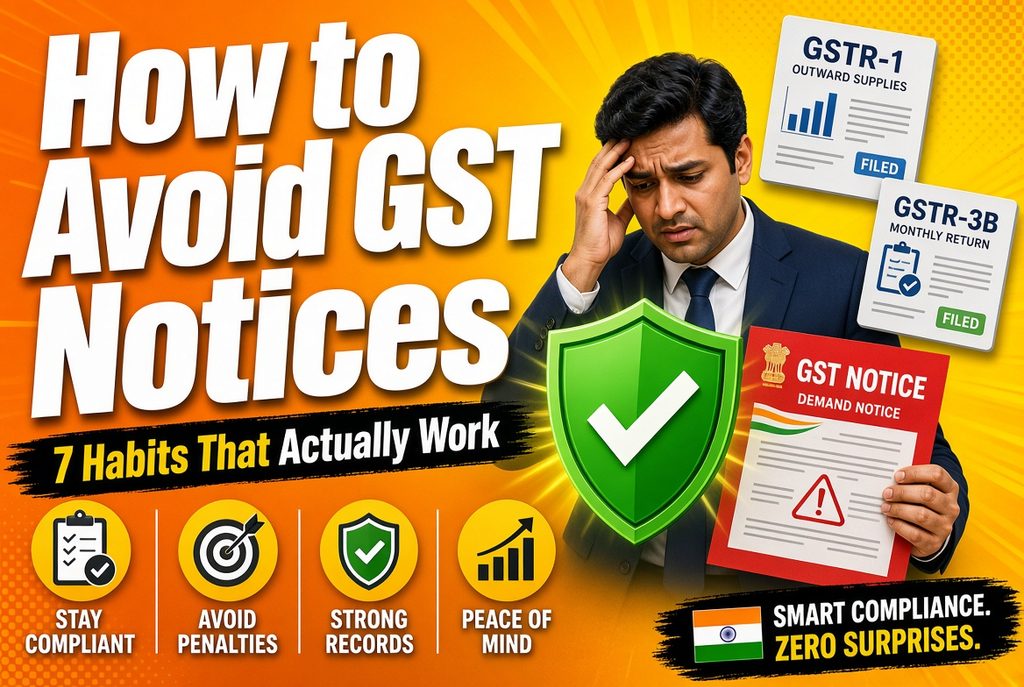
Most GST notices do not arrive because someone is hiding a large fraud. They arrive because returns, invoices and the portal do not match.
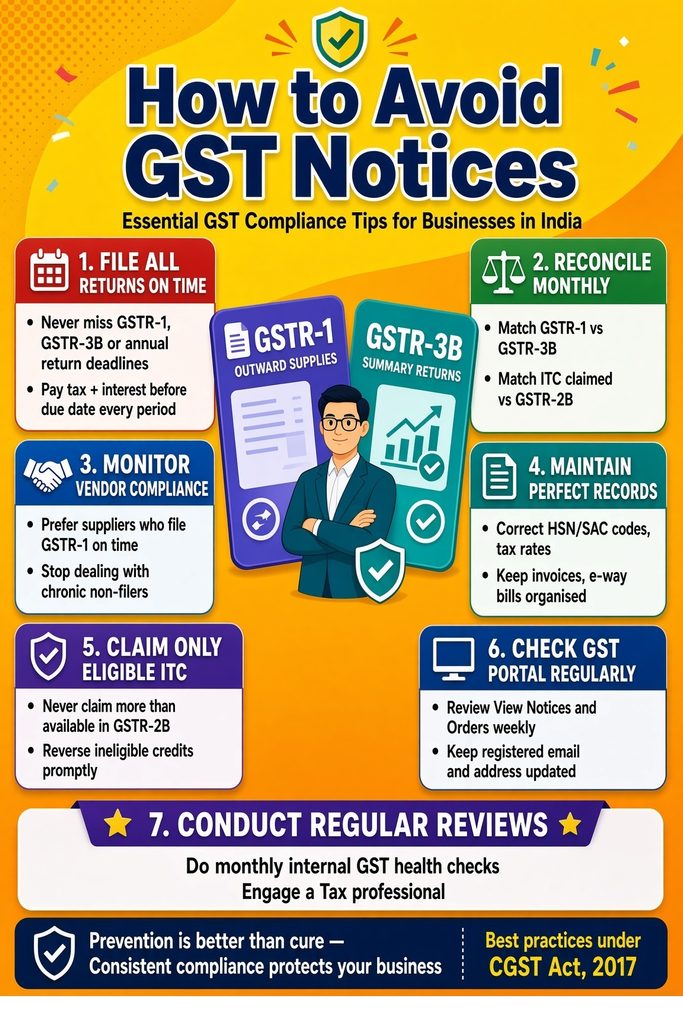
File GSTR-1 and GSTR-3B on time, every cycle, and pay the tax before the due date. Late filing and late payment are the simplest reasons for interest, late fee and a follow-up notice. An annual return missed for two years is another common trigger.
Reconcile every month. GSTR-1 should match GSTR-3B. ITC claimed in GSTR-3B should not exceed what is available in GSTR-2B. A trader in Delhi who claims ₹4 lakh ITC while GSTR-2B shows ₹2.8 lakh will almost certainly hear from the department.
Watch your vendors. If a supplier never files GSTR-1, their invoice may not appear in your GSTR-2B, and your credit becomes shaky. It is better to stop buying from chronic non-filers than to keep claiming credit that will be reversed later.
Keep records clean. Use the correct HSN or SAC, the correct tax rate, and store invoices and e-way bills so you can produce them if asked. Do not claim blocked credit — for example, GST on personal car expenses or certain food and club bills — and reverse ineligible credit as soon as you notice it.
Log in to the GST portal every week. Notices and orders sit there. An email that bounced or an old address is not a defense. Update the registered email and mobile number.
A short monthly internal check — sales vs GSTR-1, ITC vs GSTR-2B, e-way bills vs invoices — catches most problems early. Where the books are messy or the turnover is growing, a tax professional doing a quarterly health check is cheaper than a demand order.
Prevention here is ordinary discipline: file on time, match the numbers, claim only what the portal supports, and read what the department has already uploaded against your GSTIN.
For your specific situation, Contact a Professional.

Leave a Comment